An elephant statue can become a strong focal point in a garden, villa entrance, hotel, resort, estate, park, or public space. But choosing the right one is not only about finding a design you like.
The material, size, pose, trunk position, surrounding architecture, and viewing distance can all change how the sculpture feels after installation.
At Relong, we work with private clients, landscape designers, hotels, resorts, and large outdoor projects. Based on our experience, the best way to choose an elephant sculpture is to start with the space where it will be installed. Once the location is clear, decisions about material, size, and design become much easier.
1. Start With the Space, Not the Sculpture
Before choosing a specific elephant design, first think about where it will be placed and what role you want it to play.
A sculpture that looks balanced beside a residential driveway may appear too small in a large park. In the same way, a monumental bronze elephant designed for an estate lawn may feel too heavy beside a residential entrance.
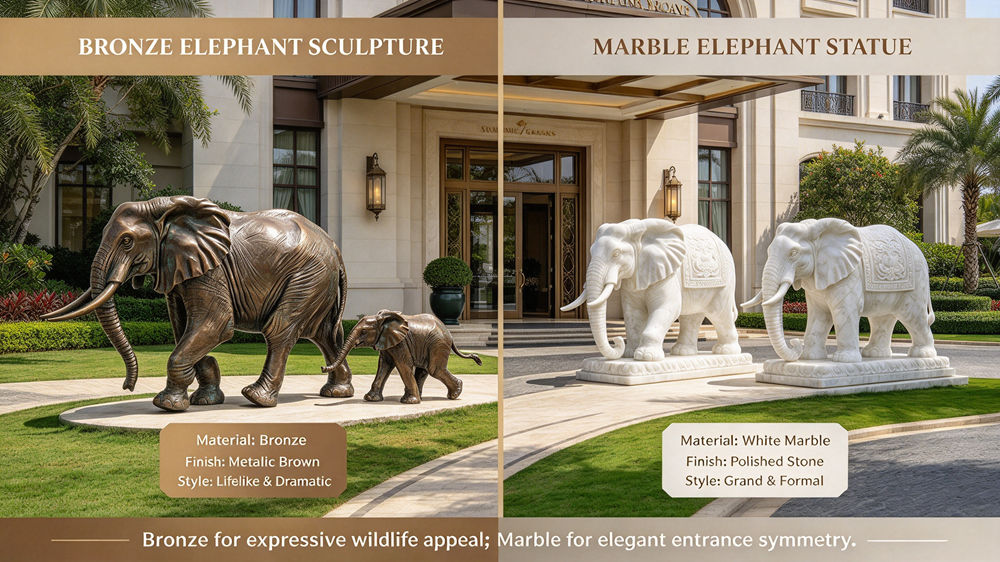
Although both bronze and marble elephant sculptures can be used in many settings, we have noticed some clear differences in what our clients usually choose.
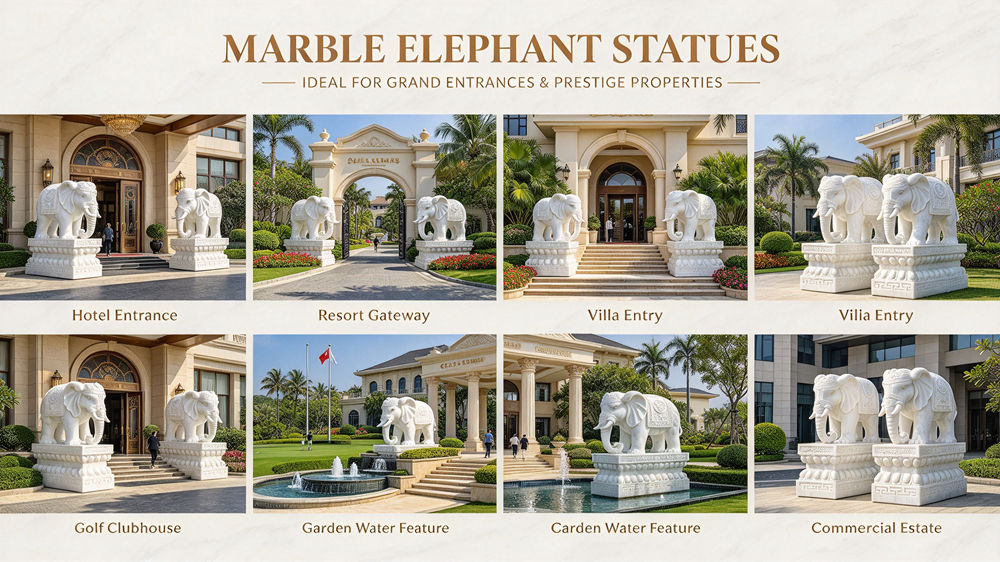
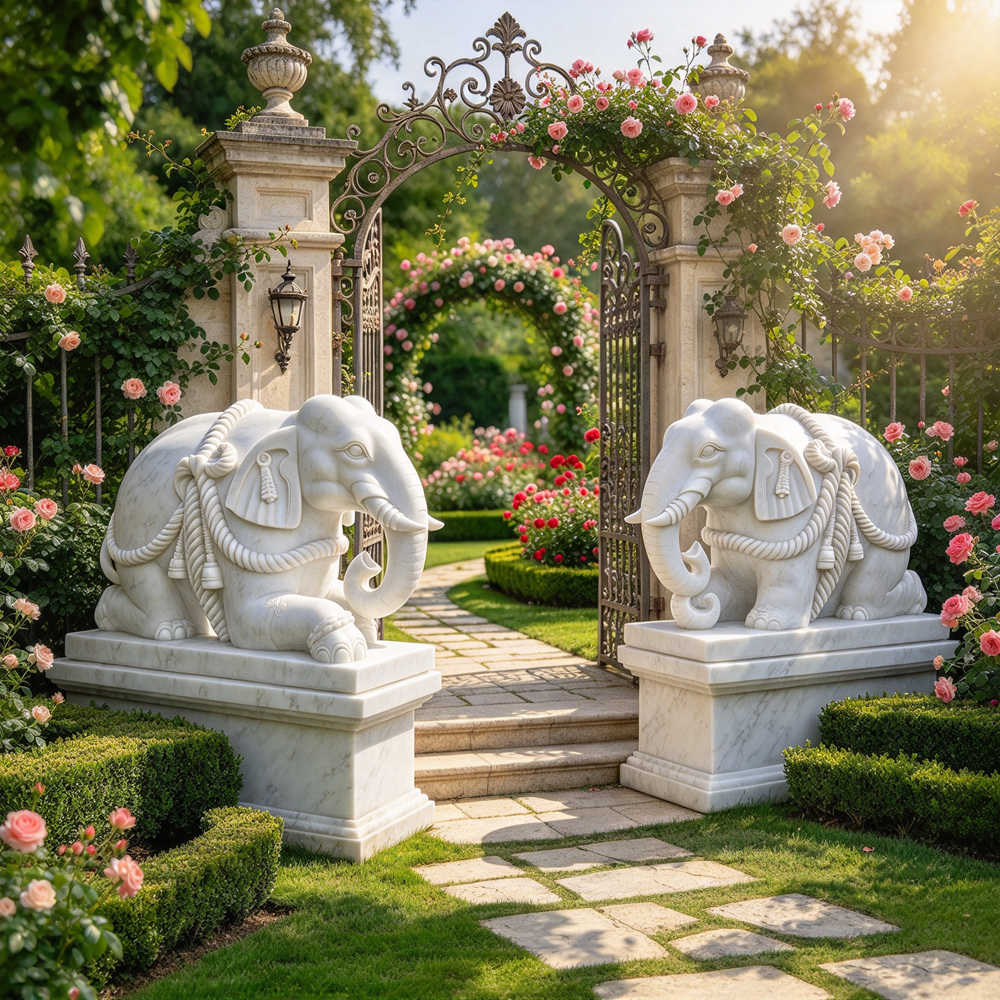
For private homes, villa entrances, driveway entrances, and formal residential spaces, marble elephant statues are especially common.
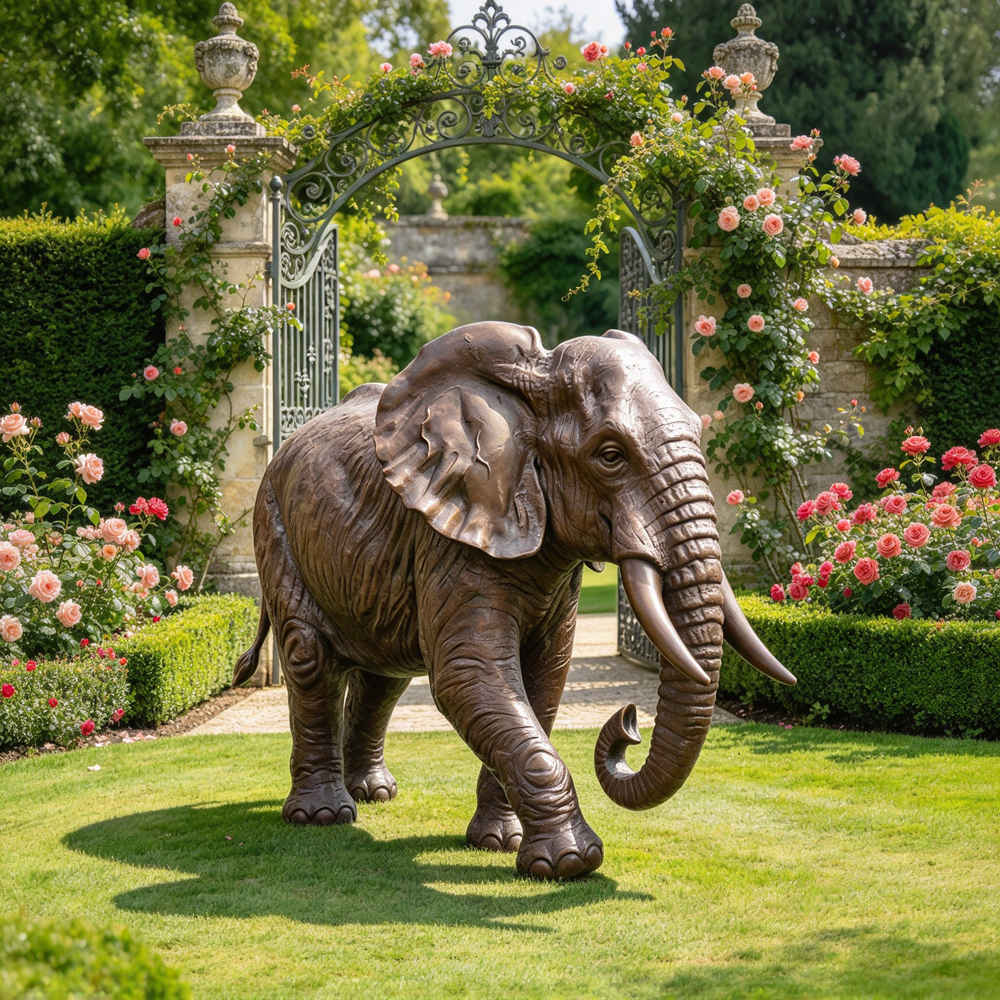
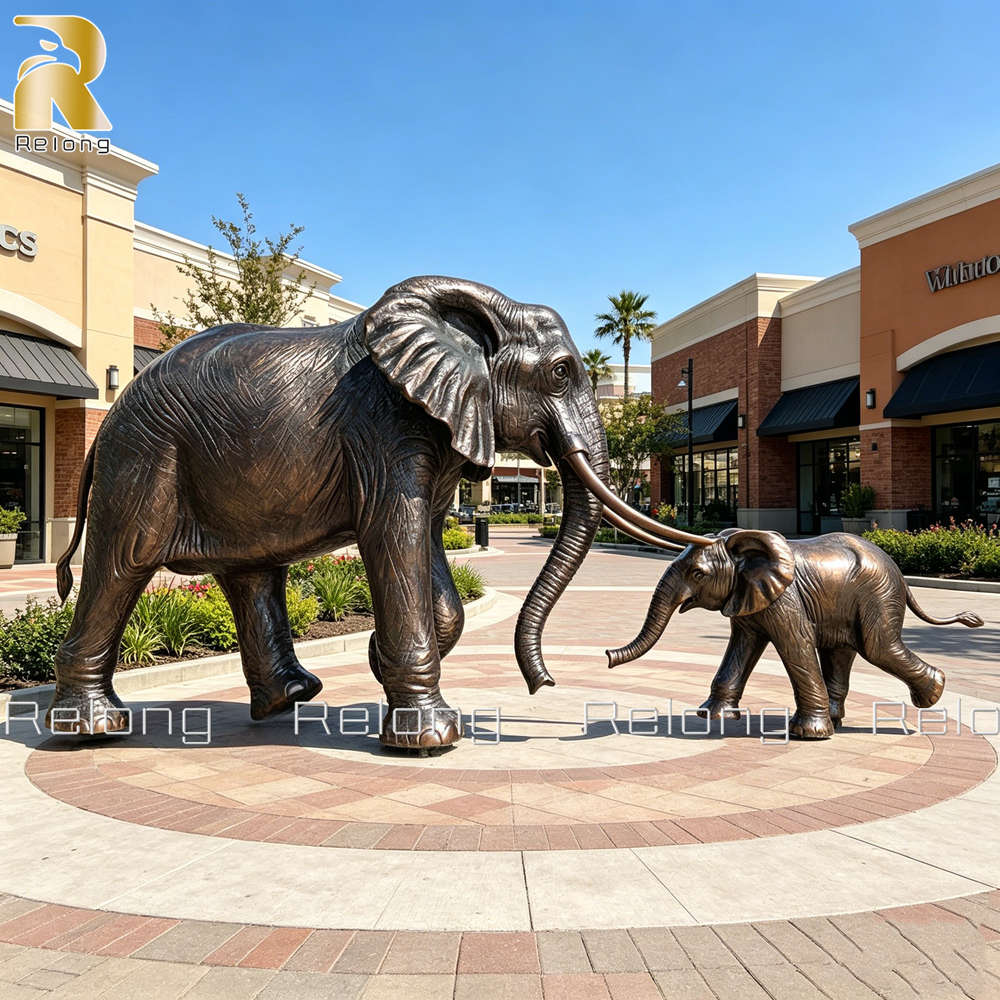
For larger gardens, parks, estates, resorts, and open landscapes, clients more often choose bronze elephant sculptures.
This is not a strict rule, but it is a useful starting point.
2. Marble Elephant Statues for Entrances and Residential Spaces
From our experience, marble elephant sculptures are often chosen for private homes and architectural entrances.
Common locations include:
- Villa entrances
- Residential gates
- Driveway entrances
- Courtyards
- Front steps
- Estate entrances
- Formal gardens
One reason is that marble naturally works well with architecture.
Stone walls, columns, steps, gates, and paved driveways create a strong visual connection with a marble sculpture.
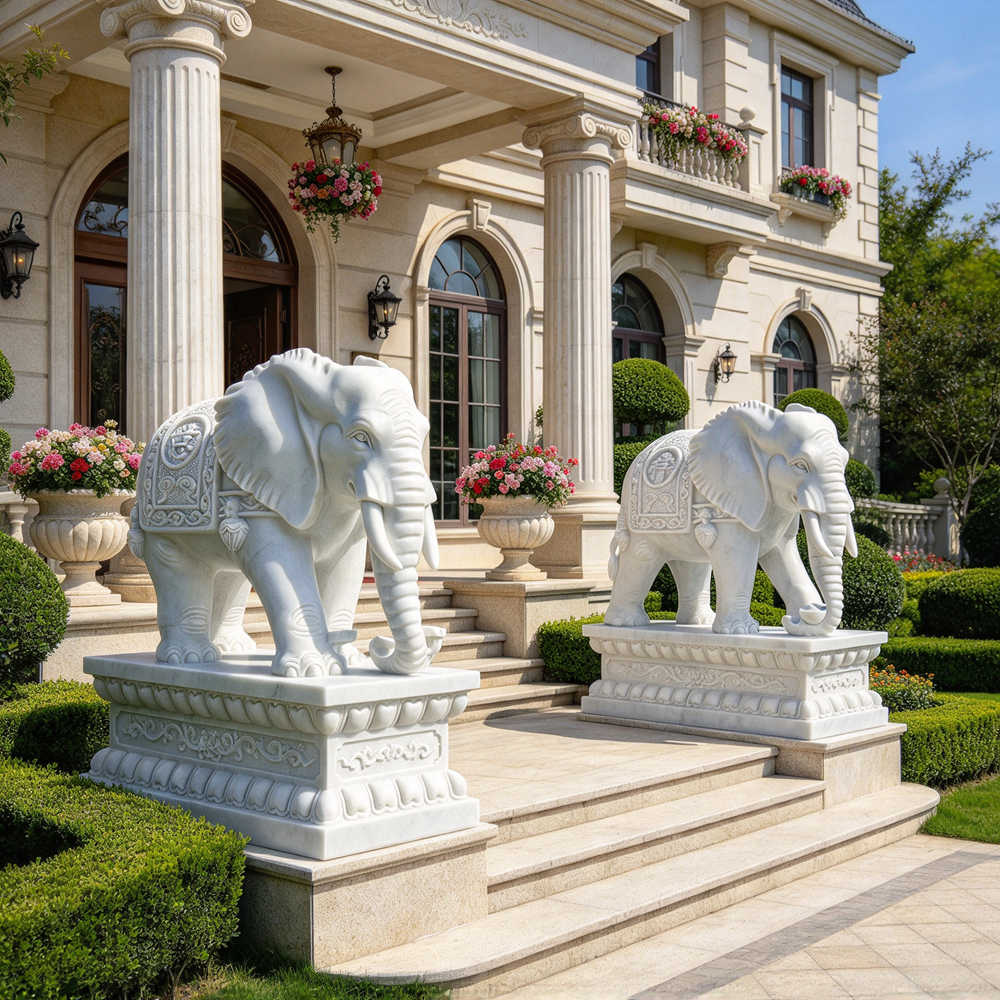
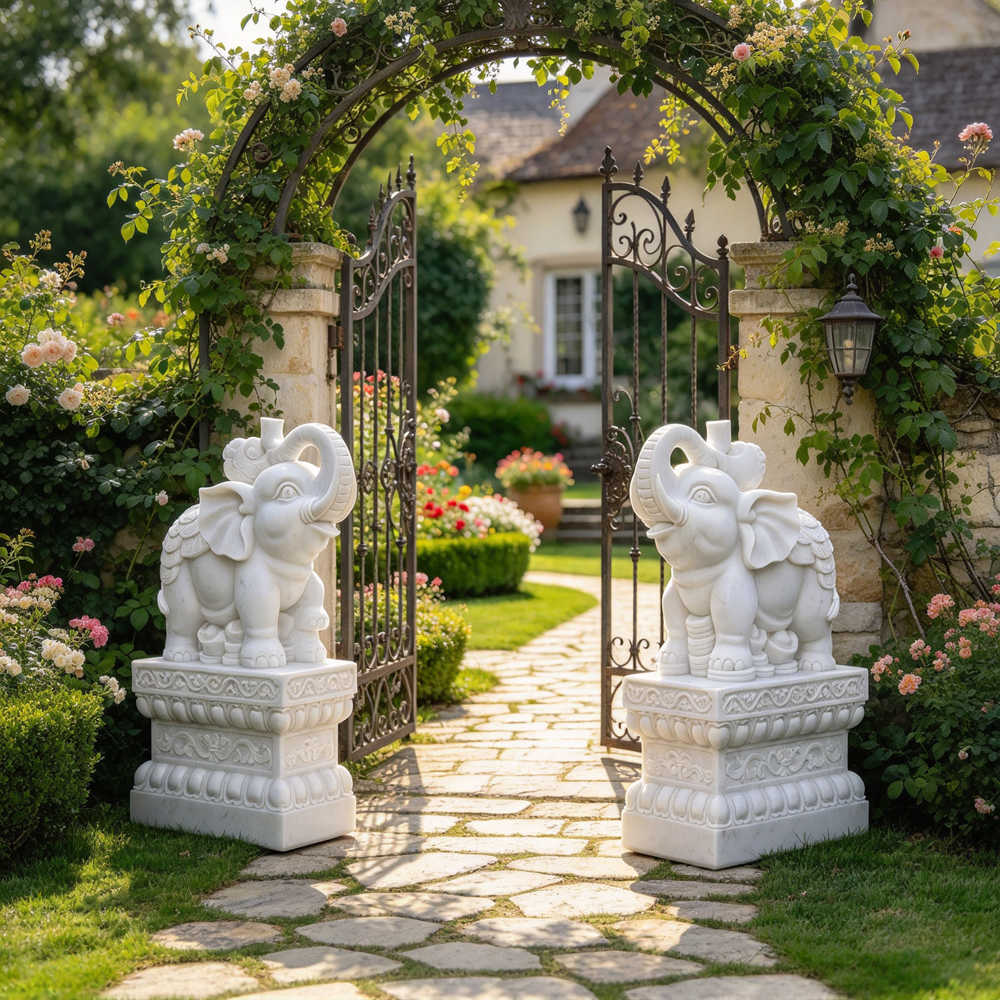
A pair of marble elephants can also create a balanced entrance.
For example, two elephants can be positioned on either side of:
- A driveway
- A gate
- A staircase
- A porch
- A villa entrance
This symmetrical arrangement often feels more formal than placing a single sculpture in the center.
Why Marble Works Well at Entrances
Marble has visual weight.
Even when the sculpture is not extremely large, natural stone gives it a solid and permanent appearance.
This can work especially well with:
- Classical architecture
- European-style villas
- Large private residences
- Stone facades
- Formal landscaping
The color of the marble can also be selected according to the surrounding architecture.
White marble creates a clean classical appearance, while beige or warmer natural stone can blend more softly with traditional buildings and landscaping.
For clients who want an elephant sculpture to feel like part of the architecture rather than a separate garden decoration, marble is often a very natural choice.
3. Bronze Elephant Sculptures for Gardens, Parks, and Open Landscapes
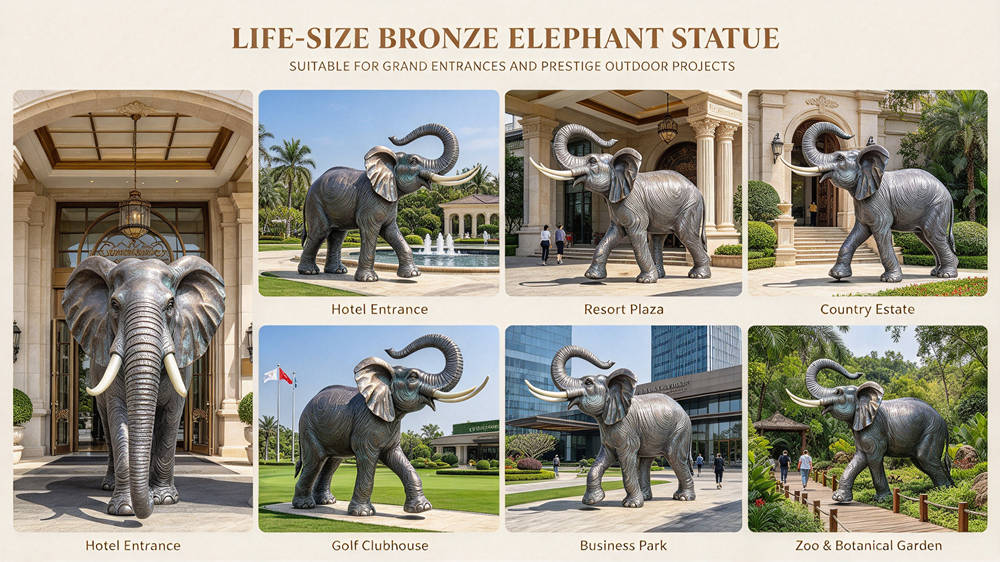
Bronze elephant sculptures are also very flexible, but we see them more often in larger and more open spaces.
Typical locations include:
- Large gardens
- Estates
- Parks
- Resorts
- Zoos
- Hotel landscapes
- Public spaces
- Commercial developments
There are several reasons for this.
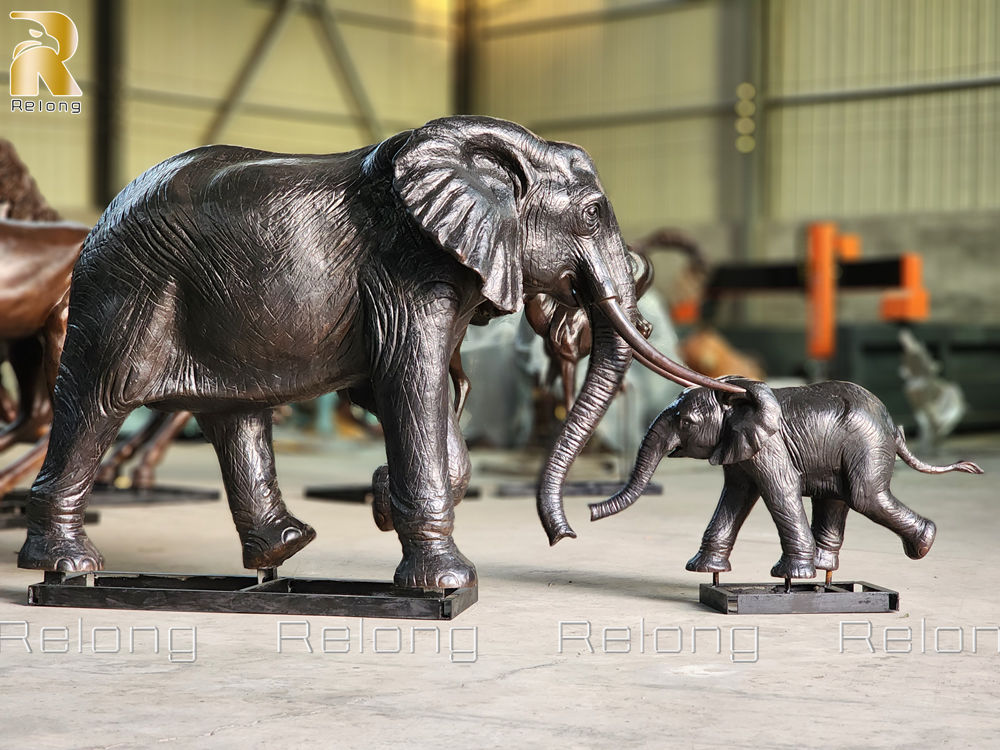
Bronze allows more freedom in pose and composition.
A bronze elephant can be shown:
- Walking
- Raising its trunk
- Moving as part of a herd
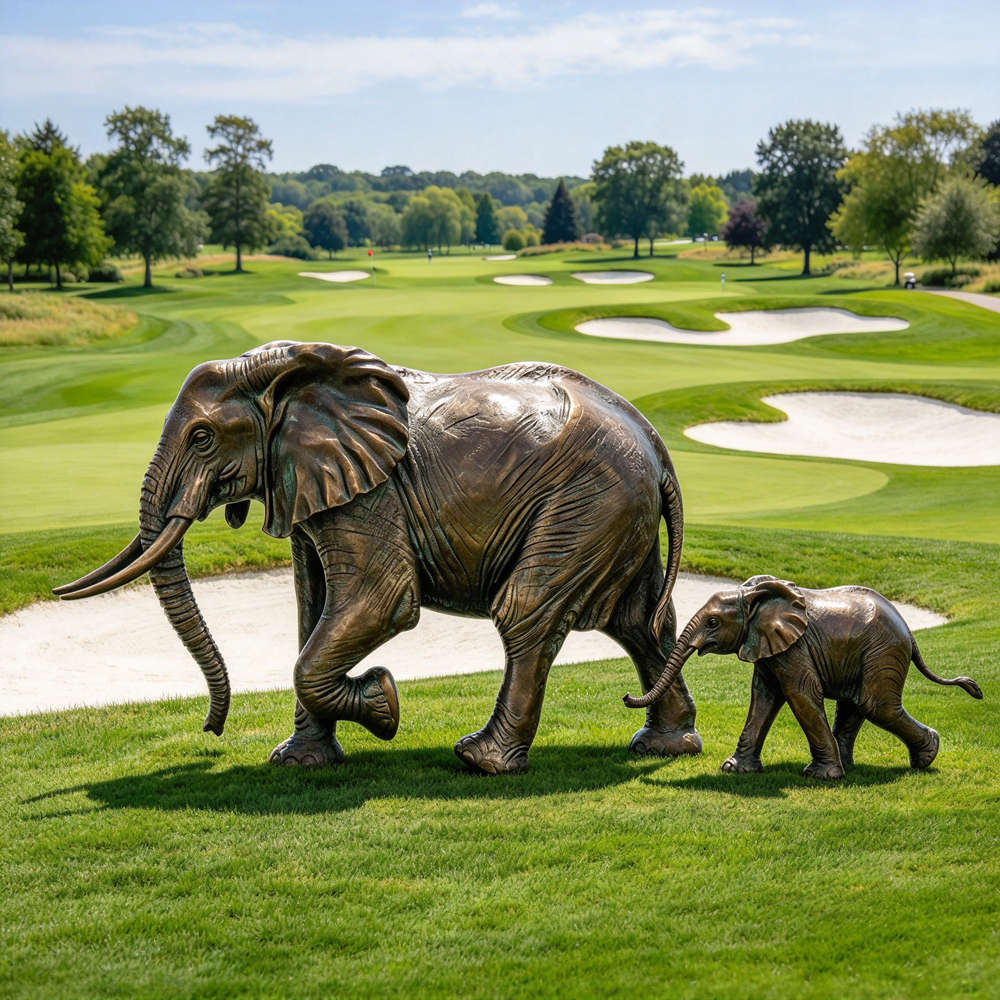
- Standing beside a calf
- Interacting with water
- Forming part of a larger landscape scene
Because of this flexibility, bronze works particularly well when the elephant is intended to become a landscape feature rather than simply frame an entrance.
Bronze Works Well in Large Spaces
Open landscapes often need a sculpture with a strong silhouette.
A realistic bronze elephant with large ears, a raised trunk, or a walking pose can remain visually clear even from a distance.
This makes bronze especially useful for places where visitors may first see the sculpture from:
- A road
- A park path
- A hotel driveway
- Across a lawn
- A large courtyard
- Another part of the landscape
For large outdoor projects, a single elephant can become a landmark, while an elephant family or herd can create a much larger landscape composition.
4. Bronze or Marble: Which Elephant Statue Should You Choose?
Both materials can work outdoors, and both can be used for residential or commercial projects.
So instead of thinking:
“Marble can only be used here.”
or:
“Bronze can only be used there.”
we usually look at the character of the space.
Marble May Be More Suitable When:
You want the sculpture to feel connected to the architecture.
This is especially common for:
- Villa entrances
- Residential gates
- Driveways
- Courtyards
- Formal gardens
Marble also works well when the project uses stone columns, walls, steps, or other classical architectural elements.
Bronze May Be More Suitable When:
You want the sculpture to feel more natural, dynamic, or integrated into the landscape.
This is common for:
- Large gardens
- Parks
- Estates
- Resorts
- Zoos
- Public landscapes
Bronze is also a good choice when the design includes movement, several elephants, a mother and calf, or a more complex pose.
Think About the Visual Style
Another useful question is:
Do you want the elephant to feel architectural or lifelike?
Marble often feels:
- Formal
- Solid
- Architectural
- Classical
- Symmetrical
Bronze often feels:
- Natural
- Dynamic
- Realistic
- Sculptural
- Landscape-oriented
Neither is better in every situation. The right material depends on the site.
5. What Size Elephant Statue Should You Choose?
Size is one of the most important decisions in an elephant sculpture project. We usually recommend choosing the size according to the surrounding space instead of starting with a fixed standard height.
Residential Entrance or Small Courtyard
Around 80 to 150 cm can work well for many smaller residential settings.
The goal is to make the elephants visible without making the entrance feel crowded.
Villa or Estate Entrance
Around 120 to 200 cm often creates a stronger architectural presence.
For paired marble elephants, the width of the entrance and distance between the two sculptures also need to be considered.
Large Garden
Around 150 to 250 cm usually gives the sculpture enough visual presence in an open landscape.
Hotel, Resort, or Estate Landscape
Around 200 to 350 cm may work better, depending on the nearby architecture and viewing distance.
Park or Large Public Space
Life-size or larger-than-life designs are often more suitable.
These dimensions are only general references.
A sculpture should always be considered in relation to its surroundings.
For example, a 2-meter elephant may feel very large beside a residential gate but relatively modest in front of a large hotel or across a wide lawn.
This is why site photos and dimensions are very useful before confirming the final size.
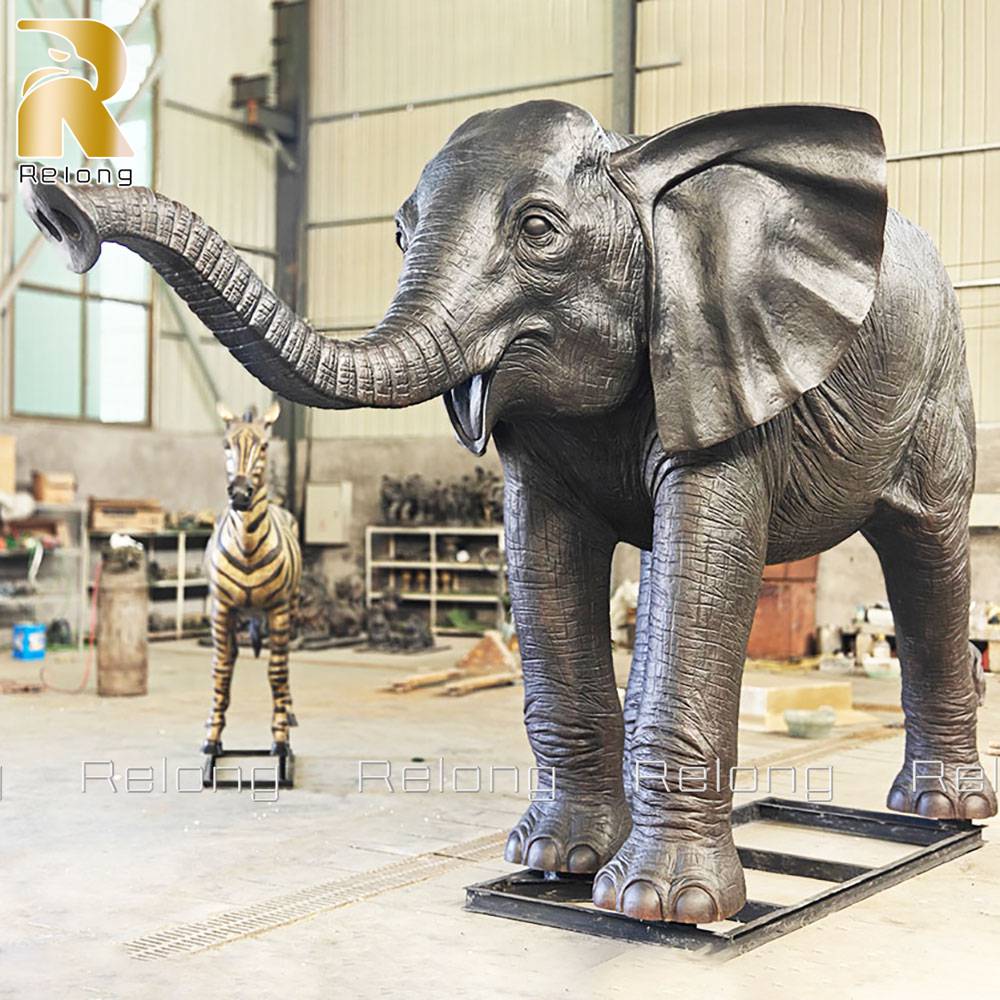
6. Elephant Trunk Up or Down: Does It Matter?
Many clients ask whether they should choose an elephant with its trunk raised or lowered.
In different cultural and decorative traditions, a raised trunk is often associated with good luck, positive energy, and celebration.
A lowered trunk is often associated with calmness, stability, and strength.
However, we also recommend looking at the sculpture from a design perspective.
Raised Trunk
A raised trunk gives the elephant:
- A taller silhouette
- More movement
- A stronger visual presence
- A more expressive appearance
This can work particularly well at entrances, in large gardens, and in public spaces where the sculpture needs to attract attention.
Lowered Trunk
A lowered trunk creates:
- A calmer silhouette
- A more grounded appearance
- A stronger sense of weight
- A natural walking or resting posture
This can work very well in realistic garden scenes or elephant family compositions.
So the trunk position should be chosen according to both symbolism and the visual effect you want.
7. Single Elephant, Pair, or Elephant Family?
The number of elephants can completely change the character of the installation.
A Pair of Elephants
For entrances, a pair is one of the most popular arrangements.
This is particularly common with marble elephants at:
- Villa gates
- Driveways
- Residential entrances
- Steps
- Courtyards
Two elephants create symmetry and help define the entrance.
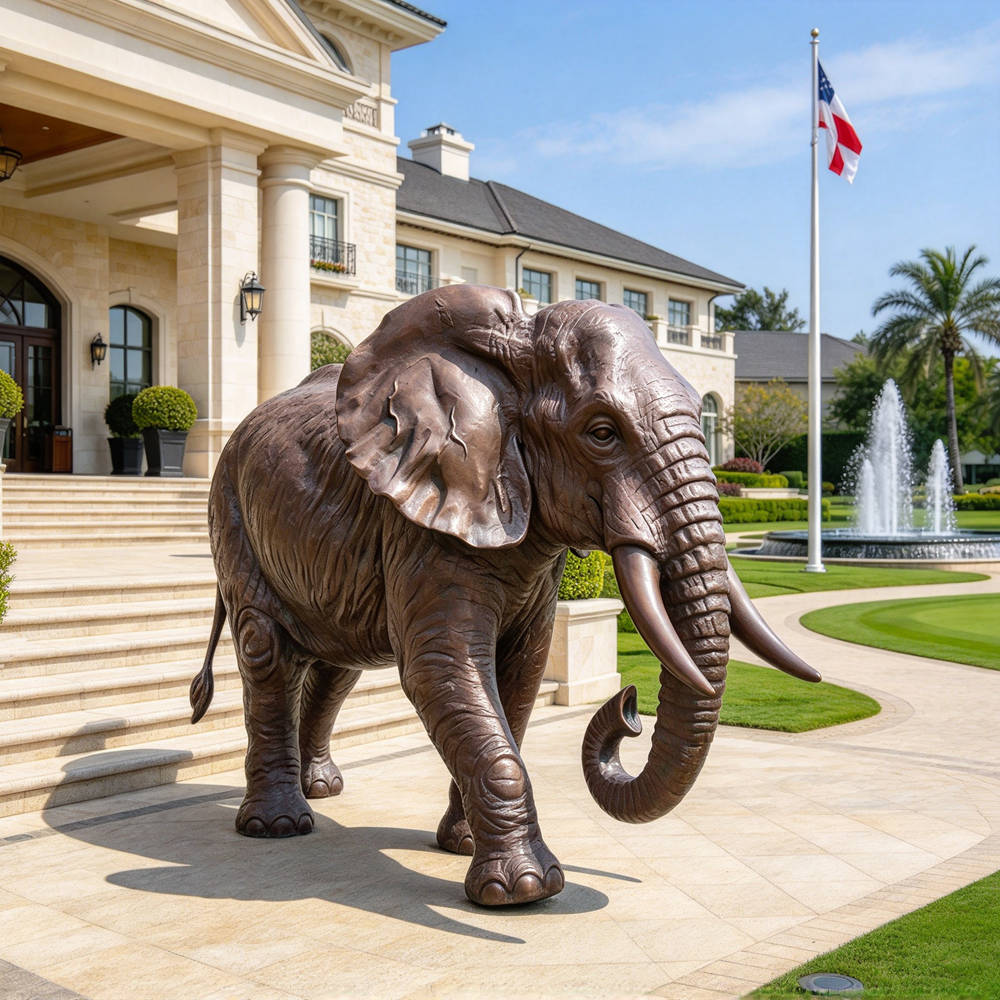
A Single Elephant
One large elephant creates a strong focal point.
This works well in:
- Gardens
- Estate lawns
- Hotel landscapes
- Parks
- Public spaces
A single sculpture usually works best when there is enough open space around it.
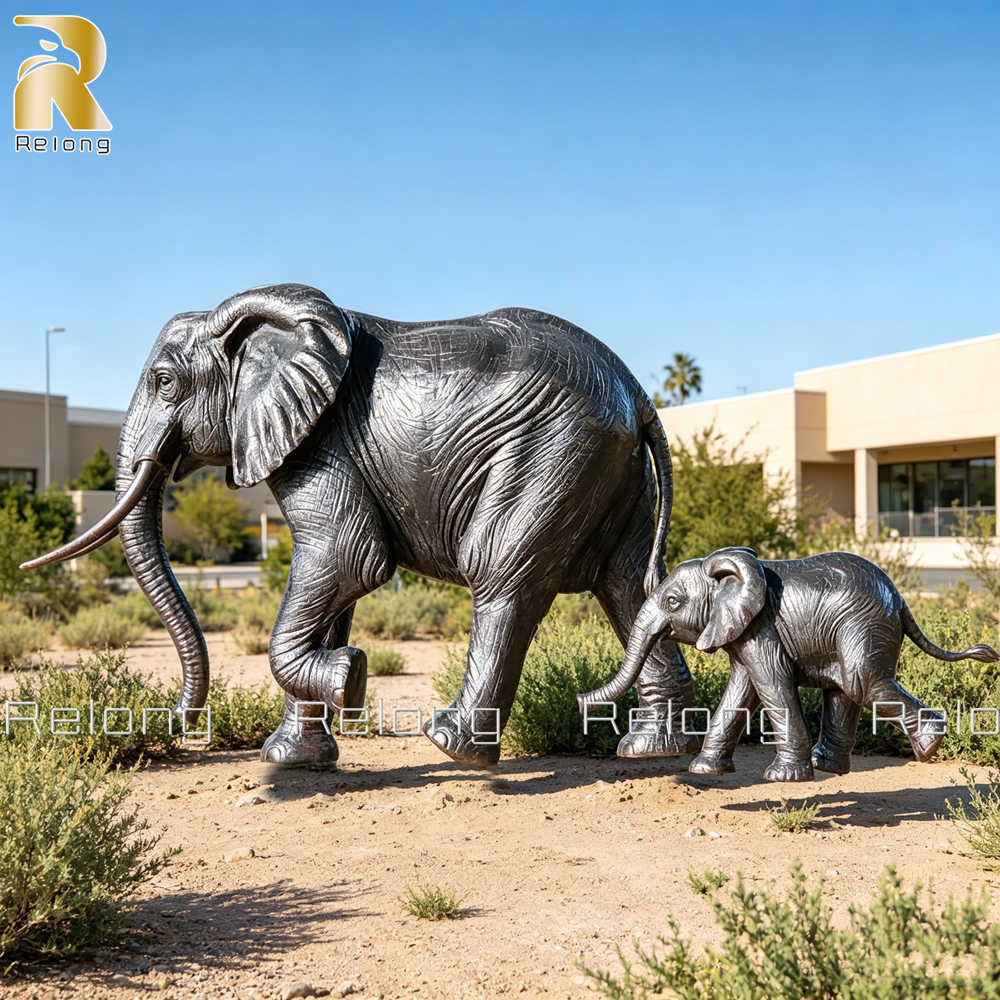
Mother and Calf
A mother and calf creates a softer and more emotional composition.
Clients often choose this type of sculpture for:
- Gardens
- Parks
- Resorts
- Family estates
- Wildlife-themed spaces
The interaction between the animals can make the sculpture feel more natural than a single standing elephant.
Elephant Herd
For very large spaces, several elephants can form a complete landscape scene.
This works especially well in parks, zoos, resorts, and large private estates.
The elephants do not need to be placed close together.
Spacing them across the landscape can create the feeling of a herd moving naturally through the site.
8. African Elephant or Asian Elephant?
If you want a realistic elephant sculpture, deciding which species you prefer is important.
African and Asian elephants have noticeably different body characteristics.
African elephants generally have:
- Larger ears
- A broader silhouette
- Different head proportions
- A more dramatic overall appearance
Asian elephants usually have:
- Smaller ears
- Different forehead shapes
- Different back and body proportions
- A softer silhouette
These differences become much more obvious when a sculpture is life-size.
If a client wants us to reproduce a particular elephant from photographs, we study details such as:
- Head shape
- Ear shape
- Back line
- Body proportion
- Trunk
- Tusks
- Leg structure
This helps the final sculpture look more convincing.
9. Consider the Viewing Distance
Viewing distance is another factor that is easy to overlook.
A sculpture seen from 2 meters away needs different visual treatment from one first seen from 30 meters away.
For a residential entrance, people may walk directly past the elephants.
Fine details such as the eyes, ears, trunk, and carved surface become more important.
For a large park or resort landscape, the overall shape becomes more important.
Visitors may first notice:
- The height
- The trunk direction
- The ear shape
- The body posture
- The relationship between several elephants
A good sculpture should therefore work at two levels.
From far away, the silhouette should be clear.
From close up, the craftsmanship should still feel convincing.
10. How Are Marble and Bronze Elephant Sculptures Made?
Marble and bronze elephant sculptures are created in very different ways.
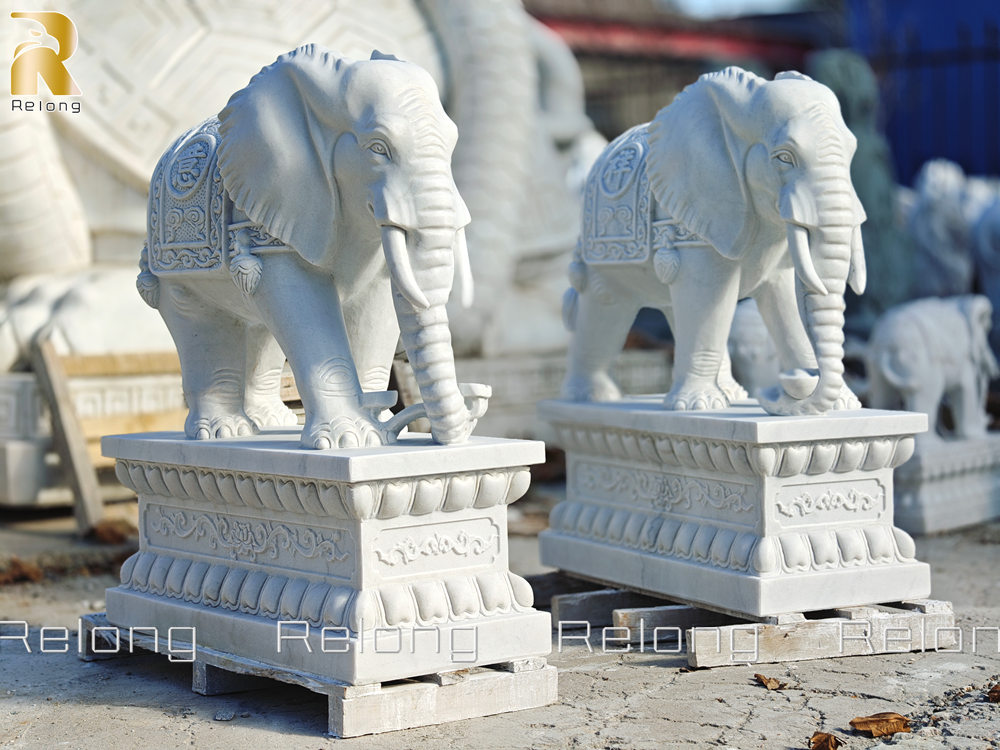
A marble elephant is primarily carved from natural stone. The basic form is developed from the marble block, then experienced sculptors continue refining the body, face, trunk, ears, decorative details, and surface by hand.
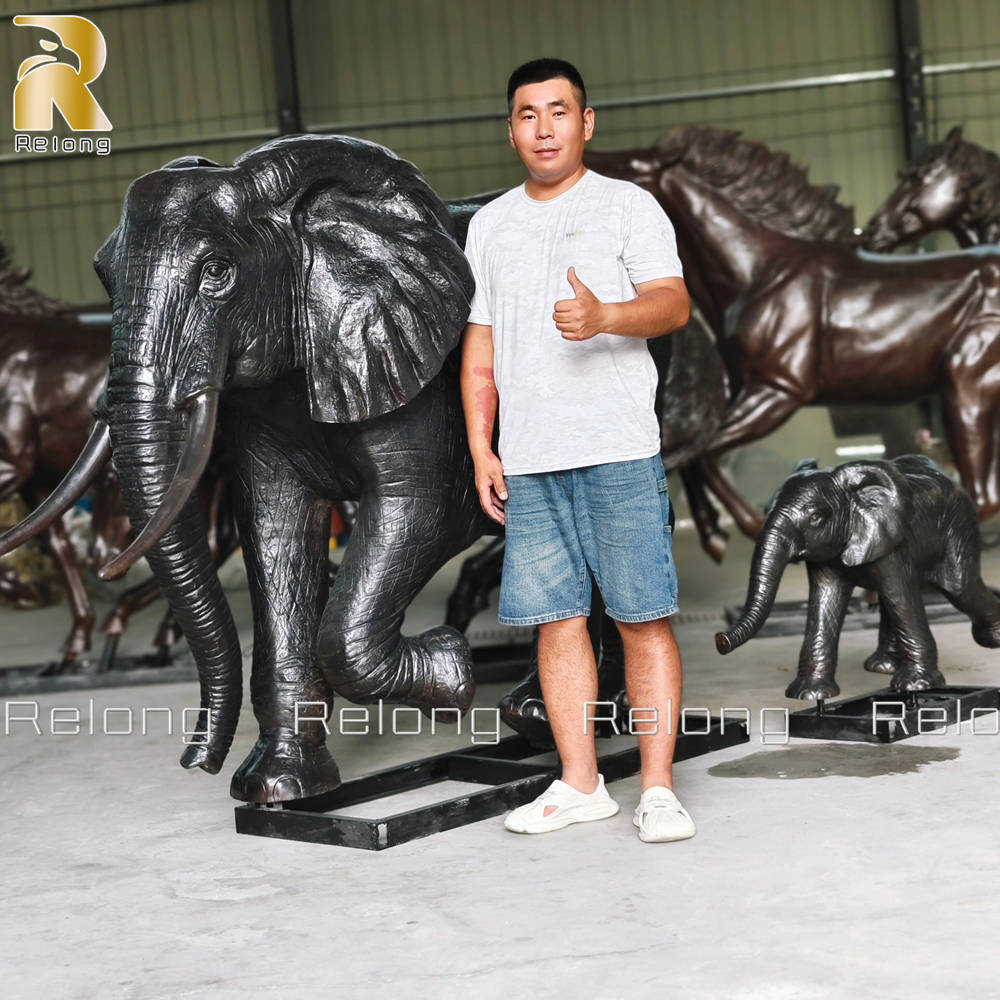
A bronze elephant is primarily created through casting. A detailed model is prepared first, followed by mold making, casting, assembly, surface finishing, and patina treatment.
Because the two materials require completely different production methods, they also create different possibilities in form and detail.
We have separate guides explaining these processes in more detail:
How Marble Sculptures Are Made: A Complete Guide
and
How Bronze Statues Are Made / Bronze Sculpture Casting Process
If you are comparing sculpture quality or want to understand the production process before ordering, these guides provide a more detailed explanation.
For this elephant statue guide, the more important question is not how the material is made, but which material works better for your space and project.
11. Common Mistakes to Avoid
Choosing Size From a Product Photo Alone
Online photos do not show scale accurately.
Always compare the actual sculpture dimensions with the installation area.
Choosing Marble or Bronze Only Because of Color
Material affects much more than color.
It also changes the visual weight, pose possibilities, relationship with architecture, and overall character of the sculpture.
Using a Small Sculpture in a Very Large Landscape
Open spaces reduce the visual impact of sculpture.
If the surrounding buildings, lawns, or trees are large, the elephant usually needs more scale to remain noticeable.
Making an Entrance Too Crowded
For paired marble elephants, leave enough space for vehicles and pedestrians.
The sculpture should frame the entrance rather than block it.
Thinking About Installation Too Late
For large sculptures, transport and foundation planning should begin before the sculpture is finished.
12. A Simple Way to Choose
If you are still unsure, this is a useful starting point.
For a villa entrance, residential gate, driveway, or formal courtyard, consider a marble elephant statue, especially if you want a pair of sculptures that feels connected to the architecture.
For a large garden, estate, park, resort, zoo, or open landscape, consider a bronze elephant sculpture, especially if you want a realistic pose, an elephant family, or a larger landscape composition.
Then decide:
- How much space is available?
- How far away will people view the sculpture?
- Do you want a single elephant, pair, or family?
- Should the elephant feel formal or natural?
- Should the trunk be raised or lowered?
Once these questions are clear, choosing the final design becomes much easier.
Final Thoughts
There is no single elephant statue that works for every project.
The right choice depends on how the sculpture relates to the surrounding space.
From our experience at Relong, marble elephants are particularly popular for villa entrances, residential gates, and driveways because their solid stone appearance works naturally with architecture.
Bronze elephants are commonly chosen for larger gardens, estates, parks, resorts, and other open landscapes because they allow greater freedom in scale, pose, and composition.
These are not fixed rules.
A bronze elephant can look excellent at an entrance, and a marble elephant can become a beautiful garden centerpiece.
The goal is to choose a material, size, and design that feel natural in the actual environment.
If you have photos, dimensions, architectural drawings, or a reference elephant design, our team can use them to help you evaluate the most suitable material and scale for your project.
Frequently Asked Questions
Is marble or bronze better for an elephant statue?
Both materials are suitable. Marble is often chosen for villa entrances, driveways, gates, and formal architectural spaces. Bronze is especially common in larger gardens, parks, estates, resorts, and open landscapes.
Are marble elephant statues suitable outdoors?
Yes. Natural marble can be used for outdoor sculpture. Material quality, carving, surface protection, climate, and installation all affect long-term performance.
Are bronze elephant statues suitable outdoors?
Yes. Bronze is widely used for outdoor animal sculpture and is especially suitable for large, realistic, and dynamic elephant designs.
Should I choose one elephant or a pair?
Pairs are popular for entrances because they create symmetry. A single elephant usually works better as a garden or landscape focal point, while families and herds are suitable for larger open spaces.
What size should an elephant statue be?
There is no fixed size. Residential entrance sculptures may be smaller, while gardens, hotels, estates, and public spaces usually require larger sculptures. The surrounding architecture and viewing distance should determine the final scale.
Can you create an elephant sculpture from a reference photo?
Yes. Reference photos can be used to develop a custom elephant sculpture. Multiple angles are especially helpful for realistic designs because they show the head, ears, body proportions, trunk, legs, and other details.